Men Have Feelings Too
Is There a Man in Your Life?
Father. Brother. Partner. Son. Friend.
Most of us can name at least one man who matters to us.
In recent years, conversations around mental health have become more open and visible. We hear more about emotional well-being, therapy, and self-care than ever before. Yet despite this progress, many men still struggle quietly, carrying stress, anxiety, and emotional pain without speaking about it.
As a therapist, I see this pattern often.
The stigma around men’s emotional health may be talked about more openly today, but in practice, many men still find it incredibly difficult to reach out for support. They are far less likely to seek therapy and far more likely to suppress what they are feeling.
Over time, those unspoken emotions don’t simply disappear. They tend to build, showing up as stress, irritability, anxiety, low mood, or a deep sense of pressure and responsibility.
Why is it still so difficult for men to talk?
There are many reasons, and the answer is rarely simple.
From a young age, many boys are taught, directly or indirectly, that showing vulnerability is a weakness. They may hear messages like:
“Be strong.”
“Man up.”
“Don’t cry.”
“Just get on with it.”
These messages shape how men see themselves. Emotional expression can feel unfamiliar, uncomfortable, or even unsafe. Many men grow into adults who feel responsible for holding everything together, while having very few places where they themselves feel held.
In my own practice, I work with many women and couples. It is still relatively rare for a man to seek therapy on his own. That, in itself, is telling. It raises an important question:
How often do we truly check in on the men in our lives?
The quiet pressure many men carry
Although society has evolved and gender roles are changing, many men still feel a deep, internalised pressure to provide, protect, and succeed. This pressure isn’t always imposed from the outside; it often lives inside their own expectations of themselves.
In conversations with male clients I have worked with, and in informal discussions over the years, some common themes emerge:
Fear of not being able to provide for their family.
Anxiety about job security and financial stability.
Worry about being judged if they struggle.
Feeling they must always be the “strong one.”
Not wanting to let their children down.
Feeling like a failure if things go wrong.
Social circles where emotional conversations simply don’t happen.
Many men describe having friends, colleagues, and busy social lives, yet no one they can truly open up to about what is going on beneath the surface.
They are surrounded by people, but emotionally alone.
The role we can all play
We often talk about self-care, therapy, and emotional well-being for ourselves. And that is important. But emotional health is also relational. It grows in the spaces between people, through conversation, empathy, and understanding.
Sometimes, the most powerful thing we can do is simply check in.
Not with a quick, passing, “You alright?”
But with a genuine moment of curiosity and care.
You might ask:
“How have you really been feeling lately?”
“Is there anything that’s been worrying you?”
“How are things at work or financially?”
“What can I do to understand how you are feeling?”
And then just listen.
No fixing.
No judging.
No rushing to solutions.
Just listening
Holding space
Opening the door
Many men do feel deeply. They care, worry, and struggle like anyone else. But for some, expressing those emotions feels unfamiliar or even shameful.
A simple, compassionate conversation can open a door that has been closed for years.
If you notice a man in your life who seems withdrawn, stressed, or unlike himself, don’t stay silent. Reach out. Offer a listening ear. And if needed, gently encourage professional support.
Sometimes knowing that someone cares and is willing to listen can be the first step toward change.
Karen Smith, Psychological Coach, Therapeutic Counsellor & Founder of The Shift Space
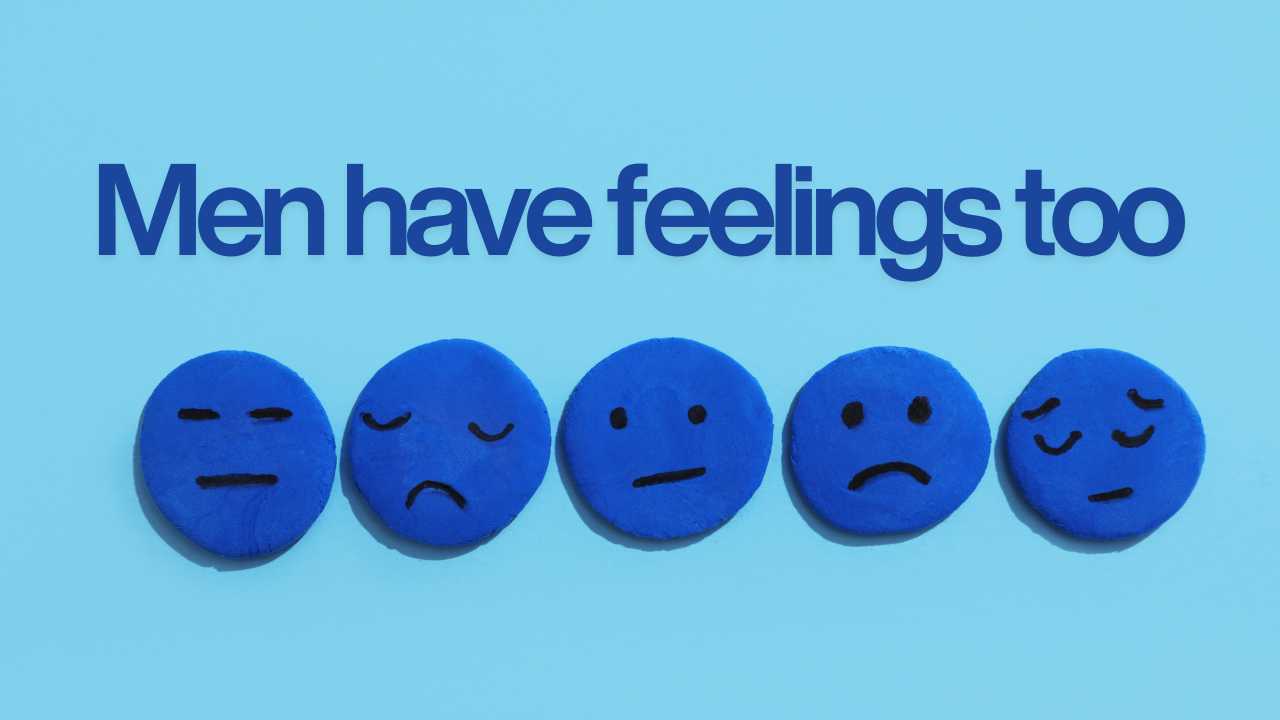
Blue background with the words “Men have feelings too” above a row of five blue faces showing different emotions.