Who’s Viewed Your Profile?
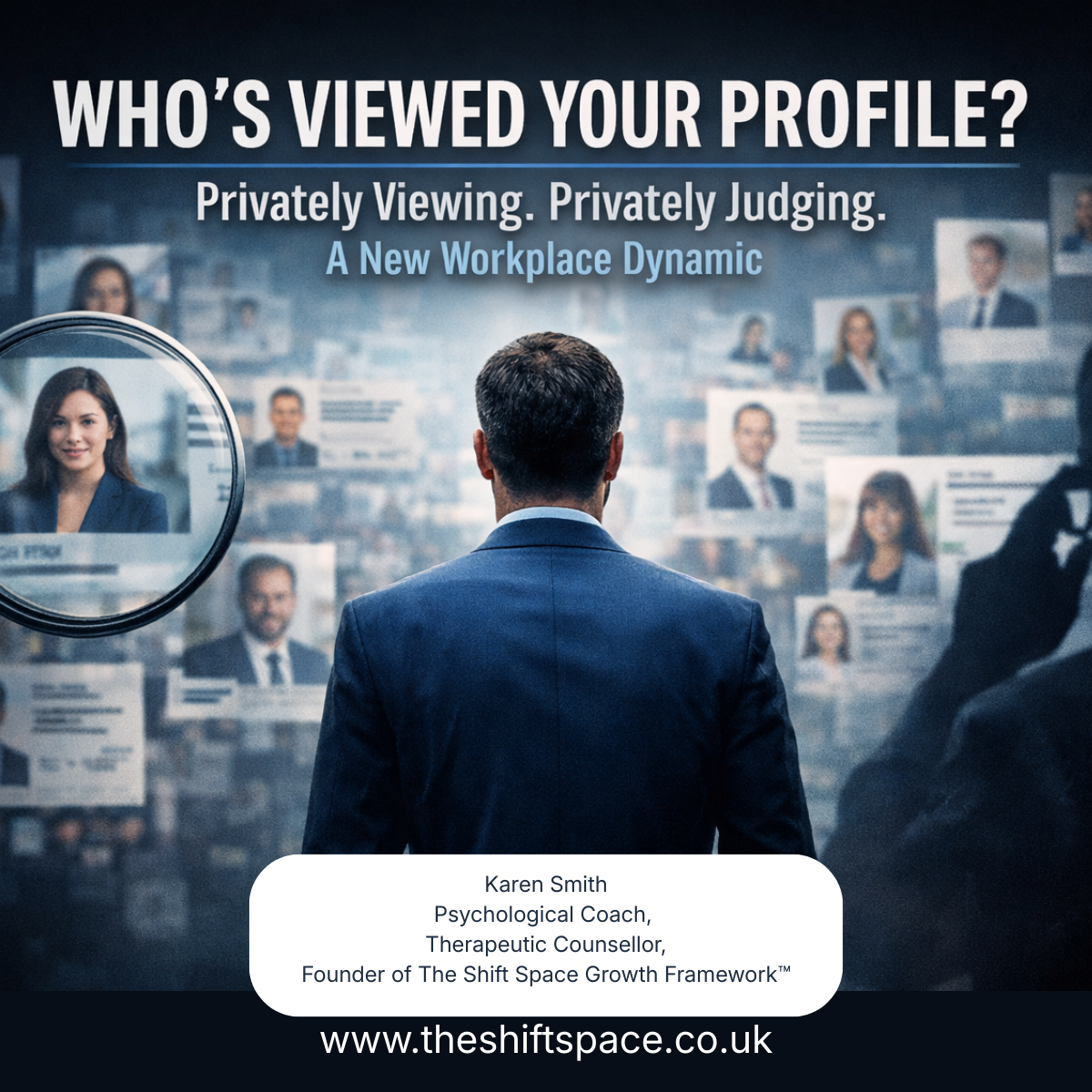
Privately Viewing. Privately Judging.
A New Workplace Dynamic.
Privately Viewing. Privately Judging. A New Workplace Dynamic.
Relational risk in the workplace is increasingly being managed at a distance. Today, it’s possible to form impressions, even judgements, about potential employees or colleagues without ever entering a shared relational space. Curiosity hasn’t disappeared from organisational life; it has simply become anonymous.
I am always struck by how many people view my LinkedIn profile in private mode. It raises an important question: if we are choosing profile views over conversations as a way to understand one another, what might this mean for staff cohesion, collaboration, trust, new connections and ultimately, performance?
Exploring why we view profiles in private mode fascinates me. Is it curiosity without social obligation, impression management, or the safety of boundary-keeping?
There is a very specific psychological dynamic at play here. When you are someone who initiates conversation, shows genuine curiosity, connects across teams, and invests in relational communication, you become socially high-resolution. Others feel seen by you.
Viewing in private mode allows us to remain less exposed. It helps us stay at a safe psychological distance, no social risk and no obligation to reciprocate interest.
Direct relational movement at work can feel like a commitment or a visibility risk, so gathering information first feels safer. We often check out colleagues who move across teams within our organisations. Yet in a professional setting, that interest can feel vulnerable, which means it shows up as anonymous profile views rather than explicit, authentic engagement and conversation.
Modern workplaces are socially complex but emotionally conservative systems. They are high-contact, low-permission environments. People interact constantly through meetings, shared projects, and cross-functional initiatives, yet there is little explicit permission for curiosity or relational investment. When someone is genuinely interested in what we do or who we are, there are few ways to enquire without it being interpreted as political, strategic, overly familiar, or agenda driven. Viewing privately becomes a socially neutral workaround, interest without implication.
Having spent 43 years in the workplace, I have seen how observation has changed. In traditional hierarchies, you knew who was senior, who made decisions, and who held influence, for better or worse. Now influence is more distributed, matrix organisations, and we often ask: Who is this person? Where do they sit in the social graph here?
Viewing in private mode helps us orient ourselves. Is this person safe to align with? Are they emerging or established?
Yet social visibility at work can create micro-exposure moments that promote appreciation, understanding, and collective interest in something meaningful. It temporarily lowers the transactional frame of work and allows for connection, appreciation, and relational association.
Psychological safety is selective. It feels comfortable to talk about weekend plans or even share frustrations with peers. But expressing admiration, taking an interest in someone’s role, or asking about their experience can feel unsafe because it exposes uncertainty.
There has been a behavioural shift, a change in how contact itself is regulated. Less direct social engagement and more respectful distance. A decline in relational depth.
Today we can see career history, infer values, and judge competence before we speak. This allows us to form impressions and expectations in advance. Psychological safety used to mean, “I feel safe enough to speak here.” Now it can become, “I feel safe enough to form an opinion without needing to speak.”
Less risky, but also less humanising.
When we meet someone after viewing their profile, we meet them with pre-loaded interpretations of competence, trajectory, status, and identity. Our first in-person interaction becomes less an experience of discovery and more a process of confirmation or disconfirmation of our existing mental model.
Profiles make us appear stable, intentional, and strategically self-authored, when in reality, careers, like lives, are messy, reactive, relational, and partly accidental. When we view profiles, we see titles, headshots, endorsements, and a polished narrative. We don’t see the humour, the evolving person, relational style, or personal values, the very things that determine whether we are safe, collaborative, and human.
What we have gained in accessibility, we may have lost in mutual discovery.
Technology has changed when we risk being known.
Encounter and interpretation have become interpretation and encounter. We used to meet, interact, develop a sense of someone, and then construct meaning. Now we review, infer, categorise, and decide whether to interact. The interpersonal moment becomes less exploratory and more evaluative.
Before platforms, relational visibility allowed for sociability or respectful detachment. Now we can be characteristically judgemental without ever entering into a shared relational space.
There has been a rise in safe curiosity, allowing people to gather information about us without exposing themselves, signalling interest, or revealing intent. Our profiles create a sense of knowing without the mutual vulnerability required for being known.
We can know someone’s role without knowing how they think.
We can read someone’s bio without knowing what matters to them.
We can view their profile without ever seeing the person behind it.
In an environment where we can learn so much about one another without ever speaking:
How often do we form professional impressions before we have had a real conversation?
What assumptions might we be carrying into our first encounters with colleagues?
How might our working relationships change if we allowed more space for genuine discovery rather than pre-emptive interpretation?
When was the last time you chose a conversation instead of a profile view to understand the person behind the role?
Perhaps the future of authentic communication in the workplace isn’t found in better profiles, but in braver conversations.